
Cough and cold in children are among the most common illnesses affecting infant and young children, especially during seasonal changes and the monsoon months. Most children experience several episodes of cough and cold every year as their immune system continues to develop. While these illnesses are usually caused by viral infections and improve within a few days, they can often leave parents wondering whether simple home care is enough or if their child needs medical attention.
Understanding the symptoms, causes, and appropriate treatment can help parents care for their children with confidence while recognising warning signs that require a pediatrician’s evaluation.
At Little’s Clinic – Pediatric & Child Care Centre, Dr. Trusha Joshi regularly evaluates children with cough, cold, fever, and other respiratory illnesses. Families from Begur, Akshayanagar, Singasandra, DLF Layout, Hulimavu, Arakere, and Electronic City trust our clinic for evidence-based pediatric care tailored to each child’s needs.
Key Takeawys
- Most coughs and colds in children are caused by viral infections and usually improve within 7–10 days.
- Antibiotics are not needed for most viral coughs and colds.
- Encourage plenty of fluids, adequate rest, and nutritious food during recovery.
- Watch for warning signs such as breathing difficulty, poor feeding, persistent high fever, or unusual sleepiness.
- Consult a pediatrician if symptoms worsen, last longer than expected, or if your child is very young.
What Is a Cough and Cold in Children?
A cough and cold are common respiratory infections that affect the nose, throat, and airways. They are usually caused by viruses and spread easily through droplets released when an infected person coughs, sneezes, or touches shared surfaces.
Children are more likely to develop coughs and colds because their immune systems are still developing. It is normal for young children to experience 6–8 episodes of cough and cold each year, especially if they attend school or daycare.
Although these infections are usually mild, proper care is important to help children recover comfortably and prevent complications.
What Causes Cough and Cold in Children?
Most coughs and colds are caused by viral infections, which means antibiotics are generally not helpful. Several different viruses can cause similar symptoms.
Common causes include:
- Rhinovirus (most common)
- Respiratory Syncytial Virus (RSV)
- Influenza virus
- Parainfluenza virus
- Adenovirus
- Coronavirus (common cold strains)
Children are more likely to catch these infections when they:
- Attend school or daycare
- Come into close contact with sick family members
- Frequently touch their face without washing their hands
- Have seasonal weather changes
- Spend time in crowded places
Exposure to cigarette smoke and air pollution can also worsen cough symptoms and make recovery slower.
Common Symptoms of Cough and Cold in Children
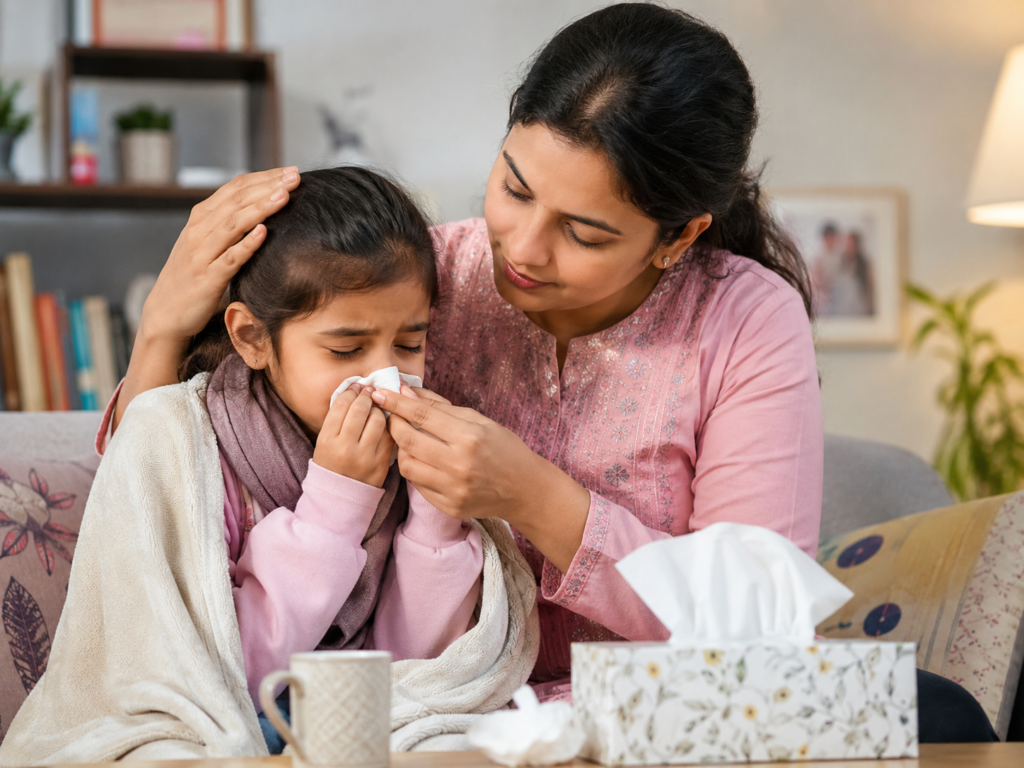
Symptoms usually begin gradually and may last for 7–10 days, although the cough can sometimes continue for up to 2–3 weeks after the viral infection has improved.
Common symptoms include:
- Runny or blocked nose
- Sneezing
- Mild sore throat
- Cough (dry or productive)
- Mild fever
- Watery eyes
- Reduced appetite
- Difficulty sleeping due to nasal congestion
- Irritability in young children
- Mild tiredness
Symptoms that usually improve on their own
- Mild cough
- Clear nasal discharge
- Occasional sneezing
- Mild fever
- Normal activity between episodes
Warning symptoms that should not be ignored
- Difficulty breathing
- Fast breathing
- Bluish lips
- Persistent high fever
- Child refusing feeds
- Signs of dehydration
- Unusual drowsiness
- Persistent vomiting
If any of these warning signs occur, your child should be evaluated promptly by a pediatrician
Home Care Tips for Children with Cough and Cold
Most children with cough and cold recover well at home with supportive care. The main aim is to keep your child comfortable while their immune system fights the viral infection. Avoid giving medicines without medical advice, especially in infants and young children.
Here are some simple home care measures that can help:
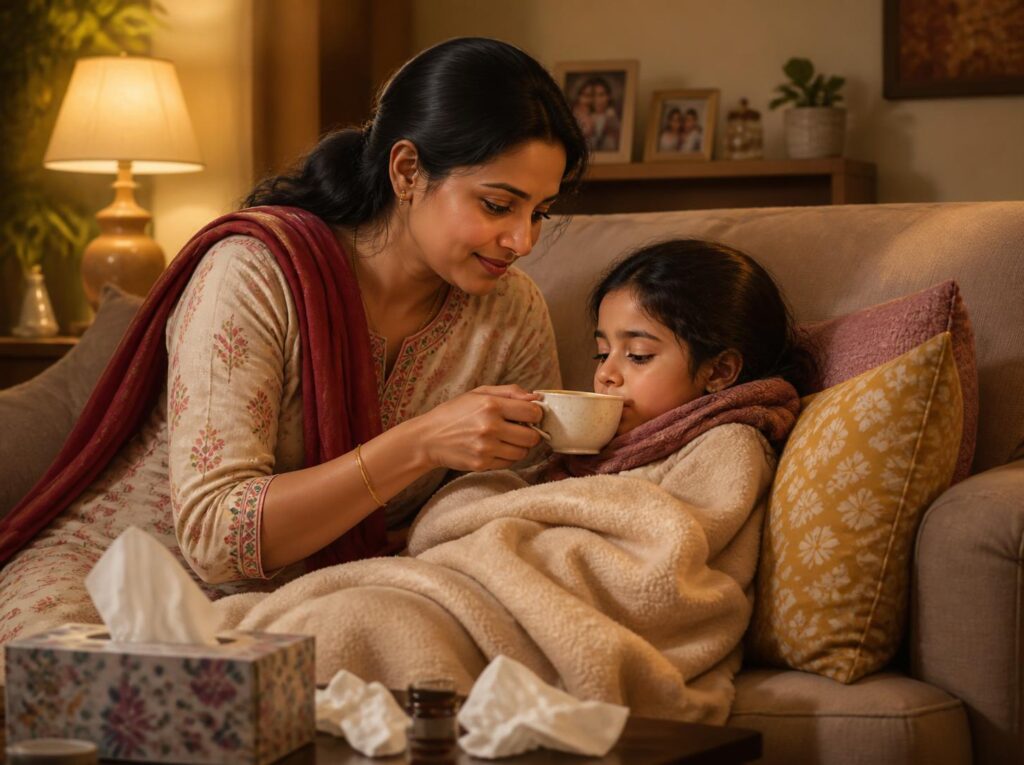
- Encourage your child to drink plenty of fluids such as water, breast milk, formula, soups, or fresh coconut water (for older children). Good hydration helps loosen mucus and prevents dehydration.
- Ensure your child gets adequate rest to help the body recover faster.
- Use saline nasal drops or saline nasal spray to relieve a blocked nose, especially before feeding or sleeping.
- For infants, a nasal aspirator can gently remove mucus after using saline drops.
- Offer warm fluids such as warm water or soup to older children, which may soothe a sore throat.
- For children above one year of age, a small amount of honey may help relieve cough. Do not give honey to babies below one year, as it can be harmful.
- Maintain good room ventilation and avoid exposing your child to cigarette smoke or strong perfumes.
What should parents avoid?
- Do not start antibiotics without consulting a pediatrician.
- Avoid giving over-the-counter cough syrups to young children unless prescribed.
- Avoid forcing your child to eat if their appetite is reduced. Offer small, nutritious meals instead.
- Avoid exposure to dust and smoke, which can worsen coughing.
Most viral coughs improve gradually within a week, although the cough itself may continue for two to three week
Do Antibiotics Help in Cough and Cold?
This is one of the most common questions parents ask.
The answer is usually no.
Most coughs and colds in children are caused by viruses, and antibiotics do not work against viral infections.
Taking antibiotics unnecessarily may:
- Cause side effects such as diarrhoea or allergic reactions.
- Increase antibiotic resistance, making future bacterial infections harder to treat.
- Delay the correct diagnosis if another illness is present.
A pediatrician may prescribe antibiotics only if there is strong evidence of a bacterial infection after evaluating your child.
Instead of antibiotics, supportive care, fluids, and rest are usually the best treatment for uncomplicated viral coughs and colds.
How Can You Prevent Cough and Cold in Children?
Although it is impossible to prevent every cough and cold, simple daily habits can significantly reduce your child’s risk of infection.
Tips to prevent cough and cold:
- Encourage regular hand washing with soap and water.
- Teach children to cover their mouth and nose while coughing or sneezing.
- Avoid close contact with people who are sick.
- Ensure your child receives all recommended vaccinations, including the annual influenza vaccine if advised by your pediatrician.
- Provide a balanced diet rich in fruits, vegetables, proteins, and whole grains.
- Ensure adequate sleep and regular physical activity.
- Keep your home smoke-free.
- Clean frequently touched toys and surfaces regularly.
Children who attend daycare or school may experience frequent viral infections, especially during the first few years. This is usually part of normal immune system development.
Parents from Begur, Akshayanagar, Singasandra, DLF Layout, Hulimavu, Arakere, and Electronic City who are concerned about recurrent coughs, frequent colds, or breathing problems in their children can consult Dr. Trusha Joshi at Little’s Clinic – Pediatric & Child Care Centre for a detailed evaluation and personalised advice
👨⚕️ Pediatrician Dr. Trusha’s Tip
Most coughs and colds in children are caused by viruses and improve with time, fluids, rest, and supportive care. Avoid starting antibiotics or cough syrups without consulting your pediatrician, especially in young children. If your child has breathing difficulty, persistent high fever, poor feeding, or unusual drowsiness, seek medical attention promptly.
Common Myths About Cough and Cold in Children
❌ Myth: Every cough needs antibiotics.
✅ Fact: Most coughs and colds are caused by viruses and do not improve with antibiotics.
❌ Myth: Green mucus always means a bacterial infection.
✅ Fact: The colour of nasal mucus alone does not tell whether an infection is viral or bacterial. A pediatrician considers the overall symptoms before deciding on treatment.
❌ Myth: Cough syrups are safe for every child.
✅ Fact: Many cough syrups are not recommended for young children unless prescribed by a doctor.
❌ Myth: Children should stop eating completely during a cold.
✅ Fact: While appetite may decrease temporarily, offering small, nutritious meals and plenty of fluids supports recovery.
Conclusion
Cough and cold are common childhood illnesses that are usually caused by viral infections and improve with supportive care at home. Understanding the symptoms, knowing when home care is sufficient, and recognising warning signs can help parents care for their children with confidence.
If your child develops persistent fever, difficulty breathing, poor feeding, dehydration, or symptoms that do not improve, it is important to seek medical evaluation without delay.
At Little’s Clinic – Pediatric & Child Care Centre, Dr. Trusha Joshi provides comprehensive evaluation and treatment for cough, cold, fever, and other childhood illnesses, helping families make informed decisions about their child’s health.
Frequenty Asked Questions
How long does a cough and cold usually last in children?
Most viral colds improve within 7–10 days. However, the cough may continue for up to 2–3 weeks as the airways recover. If symptoms worsen or persist beyond this period, consult a pediatrician.
Does every child with a cough need antibiotics?
No. Most coughs and colds in children are caused by viruses, and antibiotics are effective only against bacterial infections. Antibiotics should only be used when prescribed by a pediatrician after a proper examination.
Can I give cough syrup to my child?
Many over-the-counter cough syrups are not recommended for young children because they may have limited benefit and can cause side effects. Always consult your pediatrician before giving any cough medicine
When can my child return to school after a cold?
Your child can usually return to school once the fever has resolved, they are active, and they feel well enough to participate in normal activities. Encourage good hand hygiene to reduce the spread of infection.
What foods should my child eat during a cough and cold?
Offer soft, nutritious foods and plenty of fluids. Warm soups, fruits, curd (if tolerated), khichdi, dal, and coconut water for older children can help maintain hydration and nutrition.
Is it normal for my child to get frequent coughs and colds
Yes. Young children may experience 6–8 viral respiratory infections each year, especially if they attend daycare or school. This is generally a normal part of immune system development.
When should I consult a pediatrician for cough and cold?
Seek medical advice if your child has difficulty breathing, persistent high fever, poor feeding, dehydration, excessive sleepiness, a cough lasting more than two weeks, or if you are worried about their condition.
When Should You Visit a Pediatrician?
While most coughs and colds improve with supportive care at home, certain symptoms require prompt medical evaluation.
Consult a pediatrician if your child has:
- Difficulty breathing or fast breathing
- High fever lasting more than three days
- Persistent cough lasting longer than two weeks
- Refusal to drink fluids or poor feeding
- Signs of dehydration (dry mouth, reduced urine output, no tears while crying)
- Continuous vomiting
- Excessive sleepiness or poor responsiveness
- Wheezing or noisy breathing
- Chest pain during breathing
- Recurrent coughs affecting daily activities
- Infants younger than three months with fever or significant cold symptoms
Early evaluation helps identify complications such as pneumonia, bronchiolitis, ear infections, or asthma, ensuring timely treatment.
If you are looking for a pediatrician in Begur or nearby areas including Akshayanagar, Singasandra, DLF Layout, Hulimavu, Arakere, and Electronic City, Little’s Clinic – Pediatric & Child Care Centre offers comprehensive care for children of all ages.
Need Expert Pediatric Advice?
Every child deserves the best care. If you have any concerns about your child’s health, growth, nutrition, development, or vaccinations, our experienced pediatricians are here to help. Schedule a consultation at Little’s Clinic for trusted pediatric care.
About Dr. Trusha Joshi
Dr. Trusha Joshi is a Consultant Pediatrician at Little’s Clinic – Pediatric & Child Centre, Bengaluru.
She provides comprehensive care for newborns, infants, children, and adolescents, with a special focus on:
- 👶 Newborn Care
- 💉 Childhood Vaccination
- 📈 Growth & Development Monitoring
- 🥗 Child Nutrition
- 🤒 Common Childhood Illnesses
- 🌼 Preventive Child Healthcare
Dr. Trusha is committed to providing evidence-based, compassionate, and family-centered care to help every child grow healthy and happy.Dr. Trusha Joshi is a Pediatrician at Little’s Clinic – Pediatric & Child Centre, providing comprehensive care for newborns, infants, children, and adolescents in Begur, Akshayanagar, Singasandra, DLF Layout, and nearby areas.