
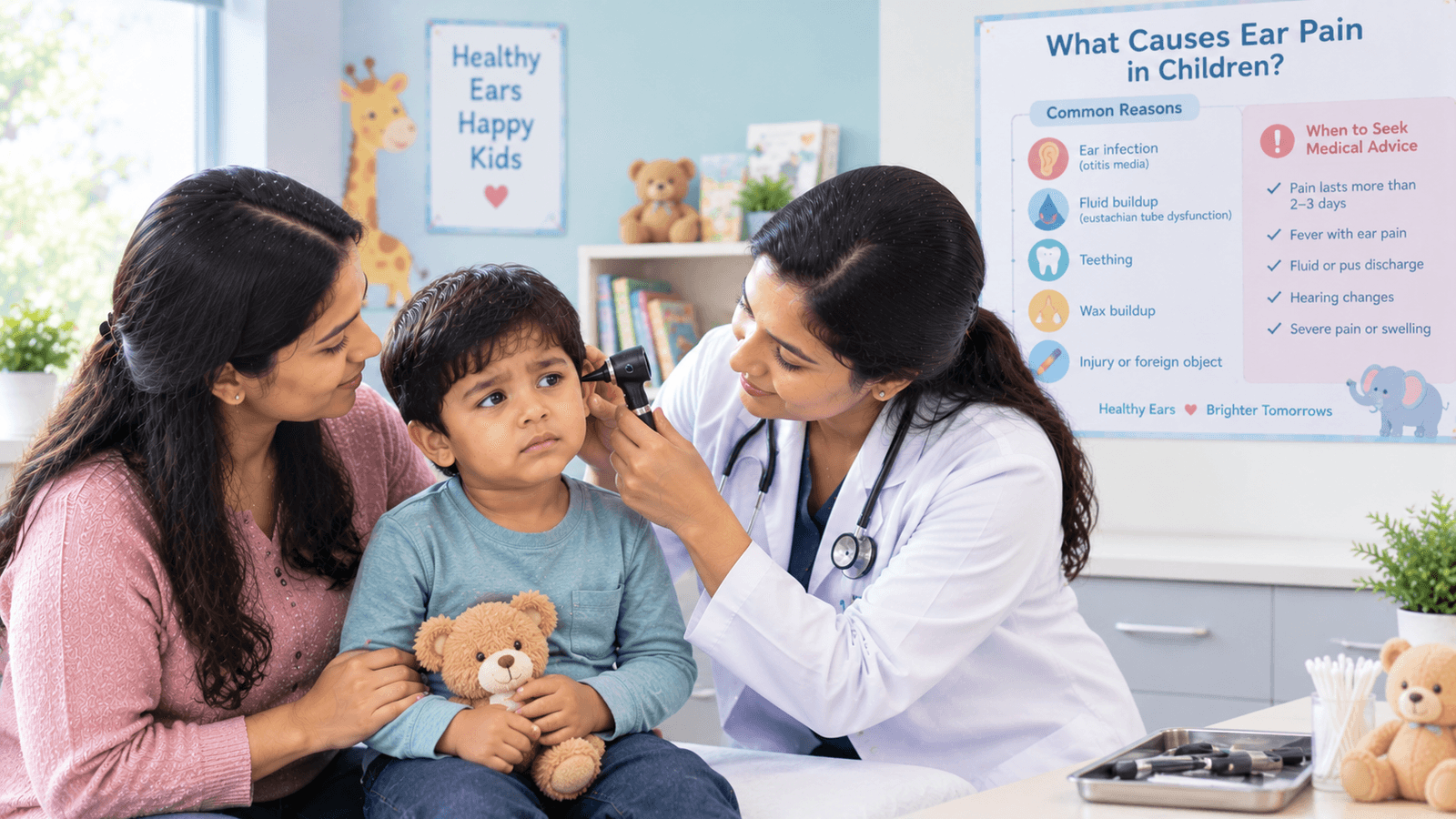
Ear pain is a common concern in children and can have several possible causes. Younger children may not always be able to explain exactly what hurts, so parents may notice ear pulling, crying, irritability, disturbed sleep, or changes in feeding instead.
While some causes of ear pain are mild, others may need examination and treatment. Understanding the possible causes can help parents know when medical advice is appropriate.
What Can Cause Ear Pain in Children?
Ear pain may result from problems inside the ear or from nearby areas.
Common causes include:
- Ear infections
- Fluid behind the eardrum
- Earwax buildup
- Outer ear irritation
- Cold or nasal congestion
- Throat infections
- Dental problems
- Minor injury or irritation
The exact cause cannot always be identified from symptoms alone.
What Are Common Signs of Ear Pain?
Older children may directly complain that their ear hurts. Younger children may show less specific signs.
Parents may notice:
- Pulling or rubbing the ear
- Crying more than usual
- Difficulty sleeping
- Irritability
- Reduced appetite
- Fever
- Reduced response to sounds
- Fluid or discharge from the ear
These symptoms can occur with several conditions, so an examination may be necessary.
Can a Cold Cause Ear Pain?
Yes. A cold or nasal infection can cause congestion and affect the pressure or fluid balance around the middle ear.
Some children may develop ear discomfort during or after a respiratory infection. If pain is severe, persistent, or accompanied by other concerning symptoms, a pediatrician should evaluate the child.
Should Parents Clean Inside a Child's Ear?
Parents should avoid inserting cotton buds, pins, or other objects into the ear canal.
The ear has a natural cleaning process, and inserting objects can push wax deeper or injure the ear canal or eardrum.
If earwax appears excessive or is affecting hearing, professional evaluation is safer.
How Can Parents Comfort a Child With Ear Pain?
Parents can help the child rest and remain comfortable while arranging medical advice if needed.
Encourage fluids and regular meals as tolerated. If the child has pain or fever, parents should use medicines only according to age-appropriate medical guidance and dosing instructions.
Antibiotics should not be started without a doctor's assessment.
When Should Parents Seek Medical Advice?
Consult a pediatrician if:
- Ear pain is severe
- Pain persists or worsens
- The child has fever
- There is fluid or discharge from the ear
- Hearing appears reduced
- The child is unusually sleepy or unwell
- Ear pain repeatedly returns
- The child has significant swelling around the ear
A pediatrician can examine the ear and determine whether treatment is required.
Can Ear Pain Be Prevented?
Not every cause of ear pain can be prevented. However, parents can reduce some risks by avoiding smoke exposure, treating respiratory symptoms appropriately, maintaining good hygiene, and avoiding objects inside the ear.
Regular pediatric care can also help identify recurring problems.
Understanding Ear Pain in Children
Ear pain can come from several different conditions, and symptoms alone do not always identify the cause. Parents should avoid self-treating with leftover antibiotics or inserting objects into the ear.
If pain persists, the child develops fever or discharge, or there are concerns about hearing, pediatric evaluation can help identify the underlying problem.
For families seeking Child Wellness guidance, pediatric consultation can cover recurring infections, growth, development, nutrition, and other common childhood concerns.
Frequently Asked Questions
Why does my child keep pulling their ear?
Ear pulling can occur with ear pain, irritation, or other discomfort. Babies may also touch their ears for reasons unrelated to infection.
Can a cold cause ear pain?
Yes. Congestion during a cold can affect pressure and fluid around the middle ear and may contribute to discomfort.
Should I use cotton buds to clean my child's ears?
No. Cotton buds and other objects can push wax deeper or injure the ear canal.
Does every ear infection need antibiotics?
Not every ear problem requires antibiotics. A pediatrician can determine the cause and whether medication is appropriate.
When should I take my child to a doctor for ear pain?
Seek medical advice for severe or persistent pain, fever, ear discharge, hearing changes, swelling, or if the child appears unusually unwell.
Can ear pain affect hearing?
Some ear conditions can temporarily affect hearing, particularly when fluid is present behind the eardrum. Persistent hearing concerns should be assessed.