Iron is an important nutrient for children's growth and development. It helps the body produce haemoglobin, which carries oxygen through the blood. Children need adequate iron as their bodies grow, but some children may not get enough through their diet or may have increased nutritional needs.
Iron deficiency can develop gradually, so parents may not always notice symptoms in the early stages. Understanding possible signs and maintaining a balanced diet can help parents support healthy growth.
Why Is Iron Important for Children?
Iron supports several important functions in the body. It is needed for haemoglobin production and plays a role in normal growth, development, energy, and other body processes.
Growing children have nutritional needs that change with age. Infants, toddlers, school-age children, and teenagers may have different dietary requirements.
What Causes Iron Deficiency in Children?
Iron deficiency can occur for different reasons.
Common contributing factors may include:
- A diet that does not provide enough iron
- Excessive intake of cow's milk in young children
- Increased iron needs during periods of rapid growth
- Poor absorption of iron
- Certain medical conditions
- Blood loss in some children
The underlying cause should be considered rather than assuming that diet is always responsible.
What Are the Symptoms of Iron Deficiency?
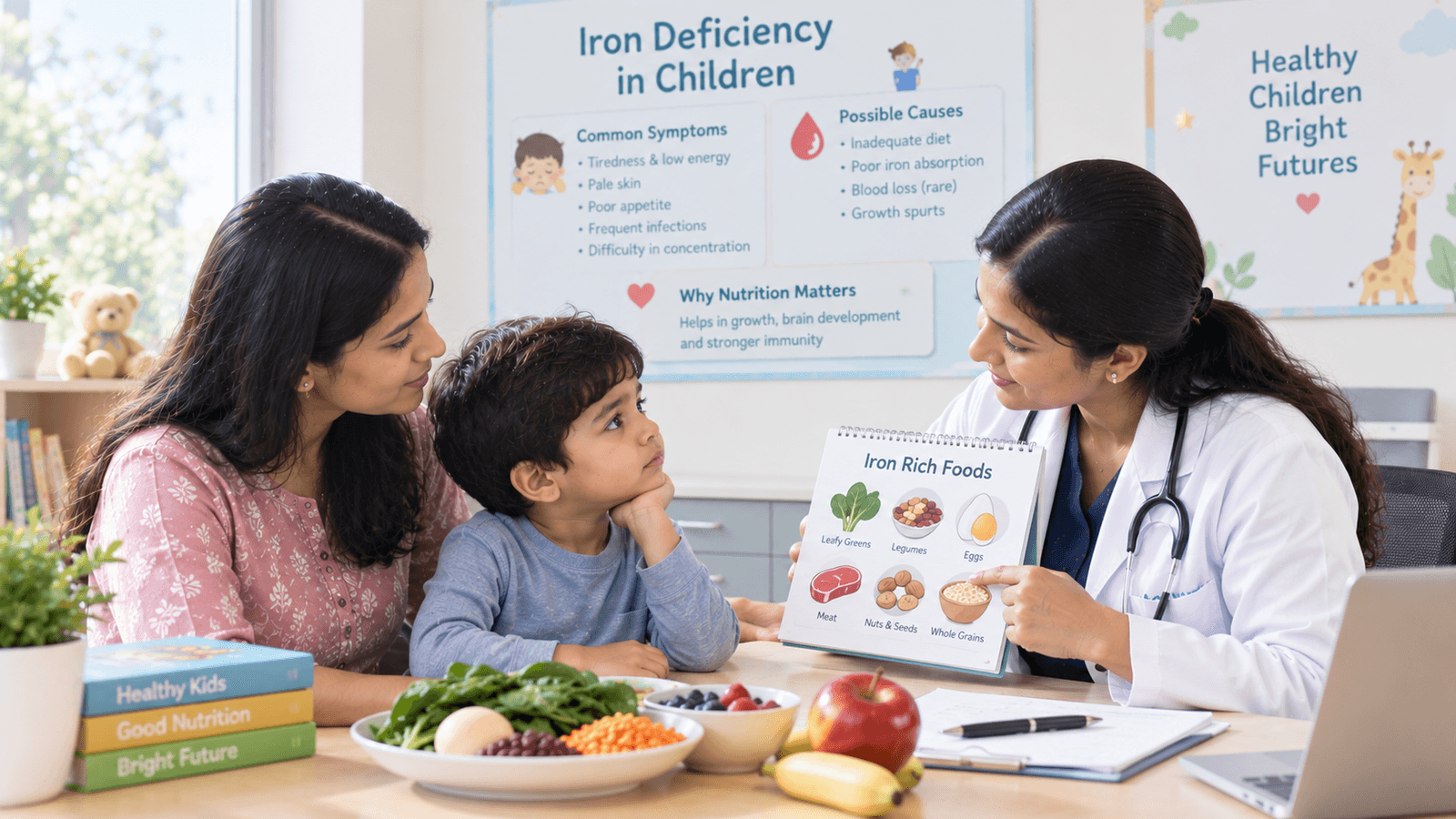
Mild iron deficiency may not cause obvious symptoms. As deficiency becomes more significant, parents may notice:
- Tiredness or low energy
- Pale skin
- Reduced appetite
- Irritability
- Difficulty concentrating
- Weakness
- Reduced interest in physical activity
These symptoms can occur for many other reasons as well. They do not confirm iron deficiency on their own.
Which Foods Contain Iron?
A varied diet can provide iron from both animal and plant sources.
Iron-containing foods may include:
- Eggs
- Meat and poultry
- Fish
- Beans and lentils
- Green leafy vegetables
- Iron-fortified cereals
- Nuts and seeds where age-appropriate and safe
Parents should choose foods according to the child's age and eating abilities.
How Can Vitamin C Help?
Vitamin C can support the absorption of iron from plant-based foods. Including foods such as fruits and vegetables alongside iron-rich meals may help improve iron absorption.
For example, a meal containing lentils or beans can be paired with a vitamin C-rich food.
Can Too Much Milk Cause Iron Problems?
Large amounts of cow's milk can sometimes contribute to iron deficiency in young children, particularly when milk replaces iron-rich foods in the diet.
Parents should discuss appropriate milk intake with their pediatrician based on the child's age, diet, and nutritional needs.
Should Parents Give Iron Supplements?
Iron supplements should not be started routinely without medical advice.
Too much iron can be harmful, and treatment depends on whether deficiency is actually present and why it developed.
If a pediatrician suspects iron deficiency, they may recommend an evaluation and appropriate testing before deciding whether supplementation is needed.
When Should Parents Consult a Pediatrician?
Parents should seek pediatric advice if a child:
- Appears persistently tired or weak
- Has unusual paleness
- Has poor appetite for a prolonged period
- Has concerns about growth or development
- Eats a very limited diet
- Has a known condition that may affect nutrient absorption
- Has symptoms that do not improve with dietary changes
A pediatrician can assess the child's growth, diet, symptoms, and medical history.
Supporting Healthy Nutrition in Children
Iron deficiency is easier to address when parents understand the child's overall nutritional needs.
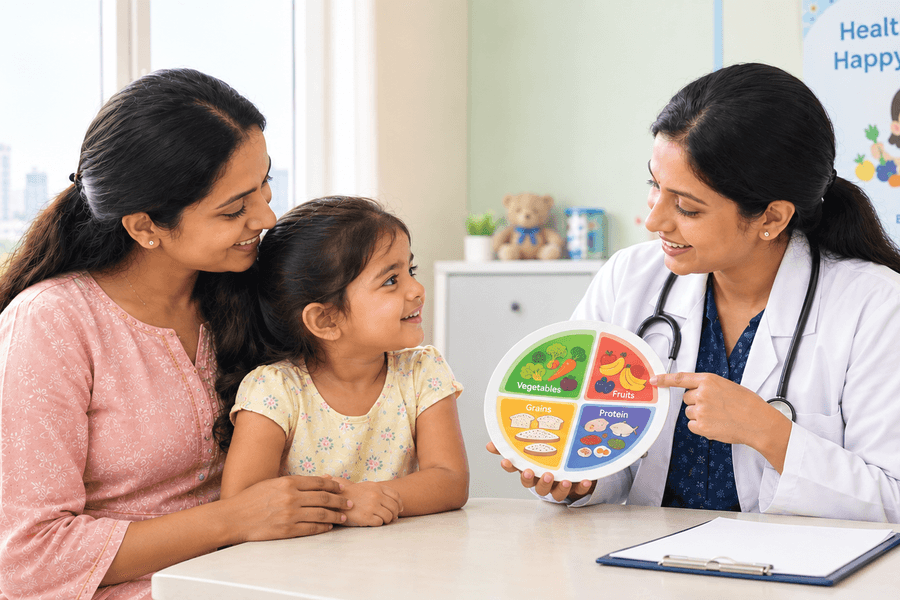
Offer a varied diet, include appropriate iron-rich foods, encourage balanced meals, and avoid relying heavily on one type of food.
If there are concerns about persistent tiredness, poor appetite, growth, or possible nutritional deficiency, professional assessment is more appropriate than starting supplements independently.
For families looking for guidance on Nutrition Consultation, pediatric nutritional assessment can help identify dietary gaps and age-appropriate ways to support healthy growth.
Frequently Asked Questions
What are the signs of iron deficiency in children?
Possible signs include tiredness, pale skin, low energy, irritability, poor appetite, and difficulty concentrating. These symptoms can also have other causes.
Which foods are high in iron for children?
Meat, poultry, fish, eggs, lentils, beans, leafy vegetables, and iron-fortified foods can provide iron.
Can a child get enough iron from vegetarian food?
Yes. A well-planned vegetarian diet can provide iron through foods such as lentils, beans, leafy vegetables, nuts, seeds, and fortified foods.
Should I give my child an iron supplement?
Do not start iron supplements without pediatric guidance. A doctor can determine whether supplementation is needed and what dose is appropriate.
Does milk cause iron deficiency?
Large amounts of cow's milk can contribute to iron deficiency in some young children when milk replaces iron-rich foods in the diet.
When should I consult a pediatrician?
Consult a pediatrician if your child has persistent tiredness, paleness, poor appetite, growth concerns, a restricted diet, or other symptoms that may suggest nutritional deficiency.