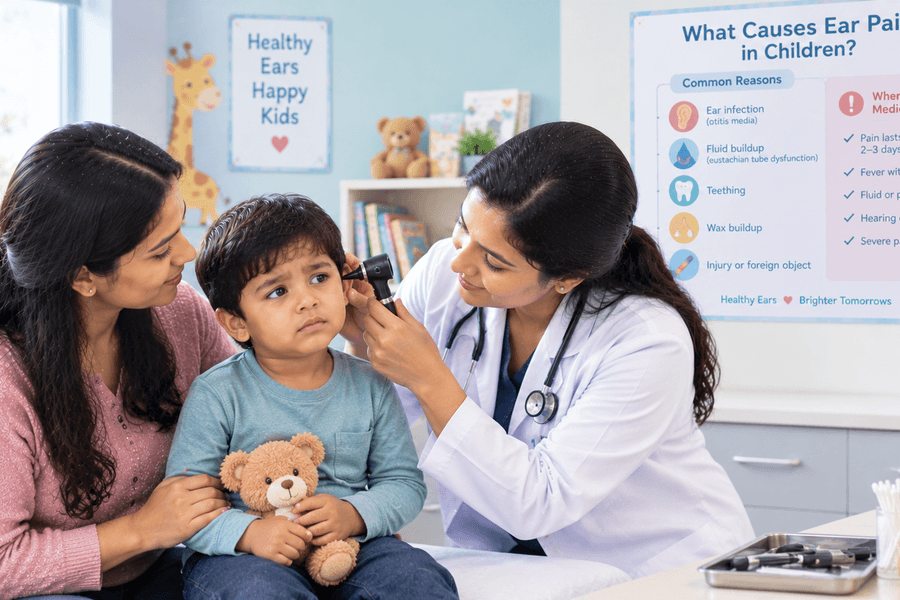

A child who suddenly becomes irritable, wakes repeatedly at night, or keeps touching their ear may be experiencing an ear problem. Ear infections are common during childhood, but the symptoms can sometimes be difficult to recognise, especially in babies and toddlers who cannot clearly explain where they are hurting.
Parents may wonder whether an ear infection always requires antibiotics, how to recognise the symptoms, and when a pediatrician should examine the child.
Understanding the common signs and causes can help parents respond appropriately when their child develops ear pain or other symptoms of an ear infection.
If you're looking for information about Child Ear Infection, this guide explains common symptoms, possible causes, treatment considerations, and when to consult a Pediatrician in Bangalore.
What Is an Ear Infection in Children?
An ear infection can affect different parts of the ear. Middle ear infections are particularly common in children and can develop when fluid builds up behind the eardrum, sometimes following a cold or respiratory infection.
Children are more likely than adults to develop ear infections, partly because of differences in the structure of their ears and the way the middle ear drains.
An ear infection may cause pain, fever, irritability, difficulty sleeping, or ear rubbing and tugging.
What Causes Ear Infections in Children?
Ear infections can develop after a cold or another respiratory infection. Viruses and bacteria can both be involved.
Common contributing factors include:
- Recent cold or respiratory infection
- Fluid buildup in the middle ear
- Exposure to cigarette smoke
- Frequent respiratory infections
- Certain age-related anatomical factors
Not every episode of ear pain is caused by an infection. Earwax buildup, pressure changes, throat problems, or other conditions can also cause discomfort.
A pediatrician can examine the ear and determine the likely cause.
What Are the Common Symptoms of a Child Ear Infection?
Symptoms can vary depending on the child's age.
Common signs include:
- Ear pain
- Fever
- Irritability
- Frequent crying
- Pulling or rubbing the ear
- Difficulty sleeping
- Reduced appetite
- Trouble hearing or responding normally
- Fluid or discharge from the ear
In babies, feeding difficulties or increased crying may sometimes be the first signs that something is wrong.
A child who suddenly becomes unsettled at night and repeatedly touches one ear may need to be examined, particularly if fever or other symptoms are present.
Can a Cold Lead to an Ear Infection?
Yes. Ear infections can develop after a cold or respiratory infection.
During a cold, congestion can interfere with normal drainage of the middle ear. Fluid may collect behind the eardrum, creating conditions in which infection can develop.
However, not every child with a cold will develop an ear infection.
Parents should monitor symptoms such as persistent ear pain, fever, worsening irritability, or discharge from the ear.
Does Every Child Ear Infection Need Antibiotics?
No. Some ear infections improve without antibiotics, depending on the child's age, symptoms, severity, and clinical findings.
A pediatrician may recommend observation for certain mild infections, while antibiotics may be appropriate for some children with more severe or persistent infections.
Parents should not start leftover antibiotics or use antibiotics prescribed for another illness.
The correct treatment depends on the cause and severity of the ear infection.
How Is a Child Ear Infection Diagnosed?
A pediatrician usually asks about the child's symptoms and examines the ear using an appropriate instrument to look at the eardrum.
The doctor may consider:
- Ear pain and duration
- Fever
- Recent cold or respiratory symptoms
- Ear discharge
- Hearing concerns
- The child's age
- Previous ear infections
The examination helps determine whether the child has an ear infection, fluid behind the eardrum, or another cause of ear pain.
When Should Parents Consult a Pediatrician?
Parents should arrange a pediatric consultation if their child has persistent or significant ear pain, fever, discharge, hearing concerns, or symptoms that are getting worse.
Medical attention is particularly important if:
- Ear pain is severe
- Symptoms continue for more than a couple of days
- Fluid or pus is coming from the ear
- Hearing appears reduced
- Fever is high or persistent
- The child becomes unusually sleepy or unwell
- Symptoms are worsening rather than improving
Children younger than three months with a temperature of 38°C or higher should receive prompt medical assessment.
How Can Parents Help Prevent Ear Infections?
Parents cannot prevent every ear infection, but some healthy habits may reduce risk.
Helpful measures include:
- Keeping vaccinations up to date
- Washing hands regularly
- Avoiding cigarette and secondhand smoke
- Limiting close contact with people who are sick
- Continuing breastfeeding where appropriate
- Seeking medical advice for persistent respiratory symptoms
Vaccination against certain infections can help reduce the risk of some illnesses associated with ear infections.
Pediatric Care for Ear Problems in Bangalore
Ear pain can be difficult for young children to explain, and parents may not always know whether the problem is an infection or another condition.
Families in Bangalore can consult a pediatrician when a child develops persistent ear pain, fever, repeated ear infections, or hearing-related concerns.
Parents living around Begur, Singasandra, Akshayanagar, Bommanahalli, Hongasandra, Devarachikkanahalli, Hosa Road, and Electronic City can seek pediatric guidance for common childhood illnesses and wellness concerns.
At Little's Clinic, pediatric care includes assessment of common childhood health concerns and guidance on appropriate treatment and follow-up.
Timely Evaluation Can Help Manage Ear Infections Properly
Child ear infections are common, but ear pain can have several possible causes. Recognising symptoms such as persistent pain, fever, irritability, ear discharge, or hearing changes can help parents decide when medical advice is needed.
Not every ear infection requires antibiotics, and treatment should be based on the child's clinical assessment rather than self-medication.
If your child has persistent ear pain or symptoms suggesting an ear infection, consulting a Pediatrician in Bangalore can help identify the cause and guide appropriate care.
Frequently Asked Questions
What are the signs of an ear infection in a child?
Common signs include ear pain, fever, irritability, ear pulling or rubbing, difficulty sleeping, reduced appetite, and sometimes fluid or discharge from the ear.
Can a cold cause an ear infection?
Yes. Ear infections can occur after respiratory infections such as a cold because congestion and fluid buildup can affect the middle ear.
Does every ear infection require antibiotics?
No. Some ear infections improve without antibiotics. The need for treatment depends on the child's age, symptoms, severity, and examination findings.
When should I take my child to a doctor for an ear infection?
Consult a pediatrician if ear pain is severe, symptoms are worsening or persistent, there is discharge from the ear, hearing appears affected, or the child develops significant fever or other concerning symptoms.
Can ear infections affect a child's hearing?
Temporary hearing difficulty can occur when fluid builds up in the middle ear. Persistent hearing concerns should be evaluated by a healthcare professional.