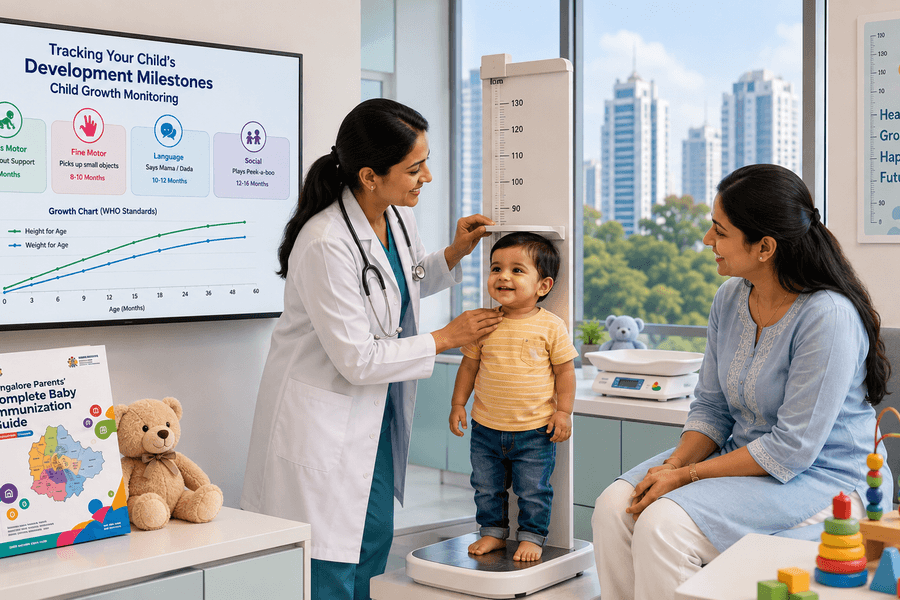

Every child develops at their own pace. Some children start walking early, while others take a little longer. Some begin speaking their first words quickly, while others need more time to communicate. These differences are often part of normal childhood development.
However, there are times when a child may take longer than expected to achieve certain developmental milestones. This is known as a developmental delay. Recognising the early signs can help parents understand their child's needs and seek professional guidance when necessary.
Development during childhood involves several areas, including movement, speech, communication, learning, social interaction, and everyday activities. Understanding these areas can help parents notice changes and discuss concerns with a pediatrician.
What Are Developmental Delays in Children?
Developmental delay occurs when a child does not reach one or more expected developmental milestones within the usual age range. These milestones describe skills that children generally develop as they grow.
A delay may affect one area or multiple areas of development. For example, a child may have difficulty using words to communicate but develop movement skills within the expected range.
Developmental delays can involve:
- Speech and language: Understanding words, communicating needs, or forming sentences.
- Motor skills: Sitting, crawling, standing, walking, or using the hands to hold objects.
- Social and emotional development: Making eye contact, responding to others, interacting, and expressing emotions.
- Cognitive development: Learning, remembering, solving simple problems, and understanding instructions.
- Adaptive skills: Feeding independently, dressing, using utensils, and developing everyday self-care abilities.
A developmental concern does not automatically mean a child has a permanent condition. Early assessment helps identify whether additional support or further evaluation is needed.
Early Signs of Developmental Delays Parents Should Notice
Parents spend the most time observing their children's everyday behaviour. Certain changes or missing milestones may be worth discussing with a healthcare professional.
1. Delays in Speech and Communication
Speech and language development involves more than saying words. It also includes understanding what others say, responding to sounds, using gestures, and communicating needs.
Possible signs include:
- Limited babbling during infancy.
- Not responding consistently to their name.
- Not using gestures such as pointing or waving.
- Having difficulty understanding simple instructions.
- Using fewer words than expected for their age.
- Difficulty combining words as language develops.
For example, a toddler who rarely uses gestures, words, or other ways to communicate may benefit from a developmental assessment.
Hearing difficulties can also affect speech development, so a healthcare professional may recommend a hearing evaluation.
2. Delays in Movement and Motor Skills
Motor development includes both large body movements and smaller movements involving the hands and fingers.
Gross motor skills include sitting, crawling, standing, walking, and running. Fine motor skills involve holding toys, picking up small objects, drawing, and using utensils.
Parents may notice concerns such as:
- Difficulty holding the head steady.
- Not sitting independently within the expected age range.
- Limited use of arms or legs.
- Difficulty holding or transferring objects.
- Not progressing towards standing or walking as expected.
- Unusual stiffness or floppiness in the body.
A child who consistently uses one side of the body much more than the other should also be assessed.
3. Limited Social Interaction
Social development helps children connect with parents, family members, and other people around them.
Some signs that may need attention include:
- Limited eye contact or social engagement.
- Rarely smiling or responding to familiar people.
- Not showing interest in interactive games.
- Limited use of gestures to share attention.
- Difficulty engaging in age-appropriate social interactions.
These signs should be considered in the context of the child's overall development. One behaviour alone cannot establish a diagnosis.
4. Difficulty Learning or Understanding
Cognitive development involves how children explore, understand, remember, and respond to their surroundings.
Possible concerns include difficulty following simple instructions, limited interest in exploring objects, trouble learning familiar routines, or not showing expected progress in age-appropriate problem-solving activities.
Parents should discuss persistent concerns with a pediatrician rather than comparing their child with siblings or other children.
5. Difficulty With Everyday Activities
As children grow, they gradually learn skills such as eating with a spoon, drinking from a cup, dressing, and following familiar routines.
Some children need additional time and support to develop these abilities. However, persistent difficulty with age-appropriate daily activities may be worth evaluating, particularly when other developmental concerns are present.
What Can Cause Developmental Delays?
Developmental delays can have different causes. Sometimes a specific reason is identified, while in other cases further assessment is needed.
Possible contributing factors include:
- Premature birth and complications around birth.
- Genetic or chromosomal conditions.
- Hearing or vision difficulties.
- Certain neurological conditions.
- Nutritional deficiencies or other medical concerns.
- Environmental and developmental factors.
In some children, developmental difficulties may be associated with conditions such as autism spectrum disorder, cerebral palsy, or global developmental delay. However, developmental delay alone does not confirm any of these conditions.
A qualified healthcare professional can evaluate the child's history, development, and examination findings to decide whether additional testing or specialist assessment is required.
Why Early Developmental Screening Matters
Developmental screening helps identify children who may need a closer assessment of their skills and progress.
During a pediatric visit, the doctor may ask about the child's birth history, feeding, sleep, movement, speech, behaviour, and interactions. They may also use age-appropriate developmental screening questionnaires.
Depending on the findings, the next steps may include:
- Hearing or vision assessment.
- Speech and language evaluation.
- Physiotherapy assessment.
- Occupational therapy assessment.
- Developmental pediatrician consultation.
- Further medical investigations when indicated.
Early identification can help children access suitable support during important stages of development. The type of intervention depends on the child's individual needs.
How Parents Can Support Their Child's Development at Home
Everyday interactions provide children with opportunities to practise new skills. Parents can support development through simple activities suited to their child's age.
Talk and read together: Describe everyday activities, name familiar objects, read picture books, and encourage your child to communicate.
Encourage active play: Provide safe opportunities for reaching, crawling, walking, building, drawing, and exploring.
Play interactive games: Activities such as peekaboo, turn-taking games, and simple puzzles can encourage communication and social interaction.
Allow opportunities for independence: Encourage age-appropriate activities such as holding a spoon, picking up toys, or helping with simple routines.
Maintain healthy routines: Regular sleep, balanced nutrition, active play, and responsive interaction support overall development.
These activities are helpful but should not replace professional evaluation when developmental concerns are present.
Developmental Assessment at Little's Clinic, Bangalore
Parents who notice differences in their child's speech, movement, behaviour, or learning may benefit from discussing their concerns with a pediatrician.
Little's Clinic is located on Manipal County Road in Singasandra, Bangalore. Parents can explore its pediatric consultation and growth and development services to understand the available assessment and guidance for children.
Families in Singasandra, Kudlu Gate, Basapura, Begur, Hosa Road, and nearby areas can contact the clinic to enquire about consultation availability.
Conclusion
Every child develops at an individual pace, but recognising persistent delays can make a meaningful difference in getting the right support. Parents should pay attention to changes in communication, movement, social interaction, and everyday skills rather than relying only on comparisons with other children.
If you have concerns about your child's development, discuss them with a pediatrician. Timely screening and appropriate guidance can help you understand your child's needs and plan the next steps.
Frequently Asked Questions
What are the first signs of developmental delays in children?
Early signs may include delayed speech, limited gestures, difficulty sitting or walking, reduced social interaction, or challenges with age-appropriate activities. The signs vary depending on the child's age and the area of development affected.
At what age should parents worry about developmental delays?
There is no single age at which every delay becomes concerning. Parents should discuss missed milestones with a pediatrician whenever they notice a persistent difference. Loss of previously acquired skills requires prompt medical evaluation.
Can a child overcome developmental delays?
Some children catch up with time, while others benefit from ongoing support and therapy. Outcomes depend on the underlying cause, the child's individual needs, and access to appropriate intervention.
Does delayed speech always mean autism?
No. Speech delay can have several causes, including hearing difficulties, language development differences, and other developmental conditions. Autism is only one possible explanation and requires a comprehensive assessment.
Which doctor should I consult for developmental delays?
A pediatrician is a suitable first point of contact. Depending on the child's needs, the pediatrician may recommend a developmental pediatrician, speech-language therapist, occupational therapist, or other specialist.
How can parents track their child's developmental milestones?
Parents can maintain a simple record of new skills, such as first words, gestures, sitting, walking, and interactions. Discussing these observations during routine pediatric visits can help identify concerns early.