Viral Fever Treatment for Children: Symptoms, Causes and When to Visit a Pediatrician
A child suddenly develops a fever, becomes less active, refuses food, or complains of body aches—and naturally, parents start wondering: Is it a common viral infection, and when does the fever require medical attention?
Viral infections are a common cause of fever in children. Fever itself is usually a sign that the body is responding to an infection rather than a disease on its own. A temperature of 38°C (100.4°F) or higher is generally considered a fever in children.
Understanding common symptoms, supportive care, warning signs, and when to consult a pediatrician can help parents respond calmly and appropriately.
What Is Viral Fever in Children?
“Viral fever” is a commonly used term for fever associated with a viral infection. Viruses can cause illnesses ranging from common respiratory infections to influenza and other viral conditions.
Fever may occur alongside symptoms such as cough, runny nose, sore throat, tiredness, body aches, headache, vomiting, diarrhea, or reduced appetite. The exact symptoms depend on the infection causing the fever.
Importantly, fever alone cannot confirm that an illness is viral. Bacterial infections and other conditions can also cause fever, so persistent, severe, or unusual symptoms should be assessed by a healthcare professional.
Common Symptoms of Viral Fever in Children
Children can experience different combinations of symptoms depending on their age and the underlying infection.
Common symptoms may include:
- Raised body temperature
- Tiredness or reduced activity
- Chills or shivering
- Headache
- Body aches
- Sore throat
- Runny or blocked nose
- Cough
- Reduced appetite
- Vomiting or diarrhea
- Increased thirst
Some children may remain relatively active despite having a fever, while others may become noticeably tired or irritable. A child's overall behaviour, hydration, breathing, and responsiveness are important factors to observe—not just the number shown on the thermometer.
What Causes Viral Fever in Children?
Several viral infections can cause fever. Common examples include viruses responsible for:
Common Cold and Respiratory Infections
Respiratory viruses can cause fever together with cough, congestion, runny nose, sore throat, or tiredness.
Influenza
Flu can cause fever, body aches, headache, cough, chills, and significant tiredness.
Other Viral Infections
Depending on the season, exposure, and local circulation of infections, children may develop other viral illnesses that produce fever and different combinations of symptoms.
Because many childhood illnesses can look similar during their early stages, parents should avoid assuming that every fever is caused by the same virus.
How Is Viral Fever Treated in Children?
In many uncomplicated viral infections, treatment focuses on supportive care and keeping the child comfortable while the body recovers. There is no single medicine that treats every viral infection.
1. Keep Your Child Hydrated
Fluids are particularly important when a child has fever, vomiting, or diarrhea.
Offer age-appropriate fluids regularly. Breastfed babies should generally continue breastfeeding. Parents should watch for signs of dehydration such as a dry mouth, fewer wet diapers or urination, and lack of tears when crying.
2. Encourage Rest
A child may be more tired than usual during an infection. Allow adequate rest and avoid forcing strenuous activities.
3. Dress the Child Comfortably
Children with fever generally do not need to be heavily covered. Over-bundling can make them uncomfortable.
4. Fever Medicines May Help With Discomfort
Fever-reducing medicines may be used when appropriate to help a child who is uncomfortable or in pain. The correct medicine and dose depend on factors such as the child's age, weight, health conditions, and other medicines being taken.
Parents should follow the product instructions and seek pediatric advice when unsure about dosing. The American Academy of Pediatrics also recommends using weight-based dosing and avoiding aspirin in children.
Do not give aspirin to children unless specifically advised by a healthcare professional. Aspirin use during certain viral illnesses has been associated with Reye syndrome, a rare but serious condition.
What Parents Should Avoid During Childhood Fever
When a child develops a fever, parents may try different home remedies. Some can be inappropriate or unsafe.
Avoid:
- Giving aspirin without medical advice
- Giving adult medicines to children
- Guessing medicine doses
- Giving multiple medicines containing the same fever-reducing ingredient
- Using ice packs or alcohol baths to lower temperature
- Overdressing or heavily covering a feverish child
If you are uncertain about medication, especially for an infant or a child with another medical condition, consult a pediatrician before giving it.
When Should Parents Visit a Pediatrician?
Not every fever requires an immediate clinic visit. However, parents should seek medical advice when the child's condition is concerning, symptoms are worsening, or the child is not recovering as expected.
Consider consulting a Pediatrician in Bangalore if your child has:
- Persistent or recurrent fever
- Significant weakness or unusual sleepiness
- Poor feeding or drinking
- Signs of dehydration
- Repeated vomiting or diarrhea
- Breathing difficulties
- Severe pain
- Unexplained rash
- Recurrent infections
- A seizure
- Symptoms that are getting worse rather than better
The American Academy of Pediatrics advises prompt medical attention for infants younger than 3 months with a temperature of 38°C (100.4°F) or higher.
When Is a Fever an Emergency?
Some symptoms require urgent medical assessment rather than waiting for a routine pediatric appointment.
Seek emergency medical care if a child:
- Has difficulty breathing
- Is difficult to wake or unusually unresponsive
- Has a seizure
- Has blue, grey, or unusually pale skin or lips
- Develops a rash that does not fade when pressed
- Appears severely dehydrated
- Is confused or unusually difficult to settle
- Has a significant deterioration in their condition
These warning signs can indicate a more serious illness and should not be managed solely at home.
How Long Does Viral Fever Usually Last?
The duration depends on the virus and the child's overall health. Many uncomplicated childhood fevers improve over a few days, but the course can vary.
Parents should focus not only on the temperature but also on whether the child is drinking, urinating, interacting appropriately, breathing comfortably, and gradually improving.
If fever persists, symptoms worsen, or the child continues to appear unwell, a pediatric assessment is appropriate.
Viral Fever vs. Bacterial Infection: Can Parents Tell the Difference?
This is one of the most common questions parents ask.
Can you tell whether a child's fever is viral or bacterial just by looking at symptoms?
Not reliably.
Some viral and bacterial infections can produce similar symptoms. The child's age, symptoms, examination findings, medical history, and sometimes diagnostic testing may be needed to determine the likely cause.
This is why parents should avoid starting antibiotics on their own simply because a child has a fever. Antibiotics treat certain bacterial infections; they do not treat viral infections.
A pediatrician can determine whether further evaluation or treatment is necessary.
How Can Parents Monitor a Child With Fever at Home?
Parents can keep track of:
Temperature
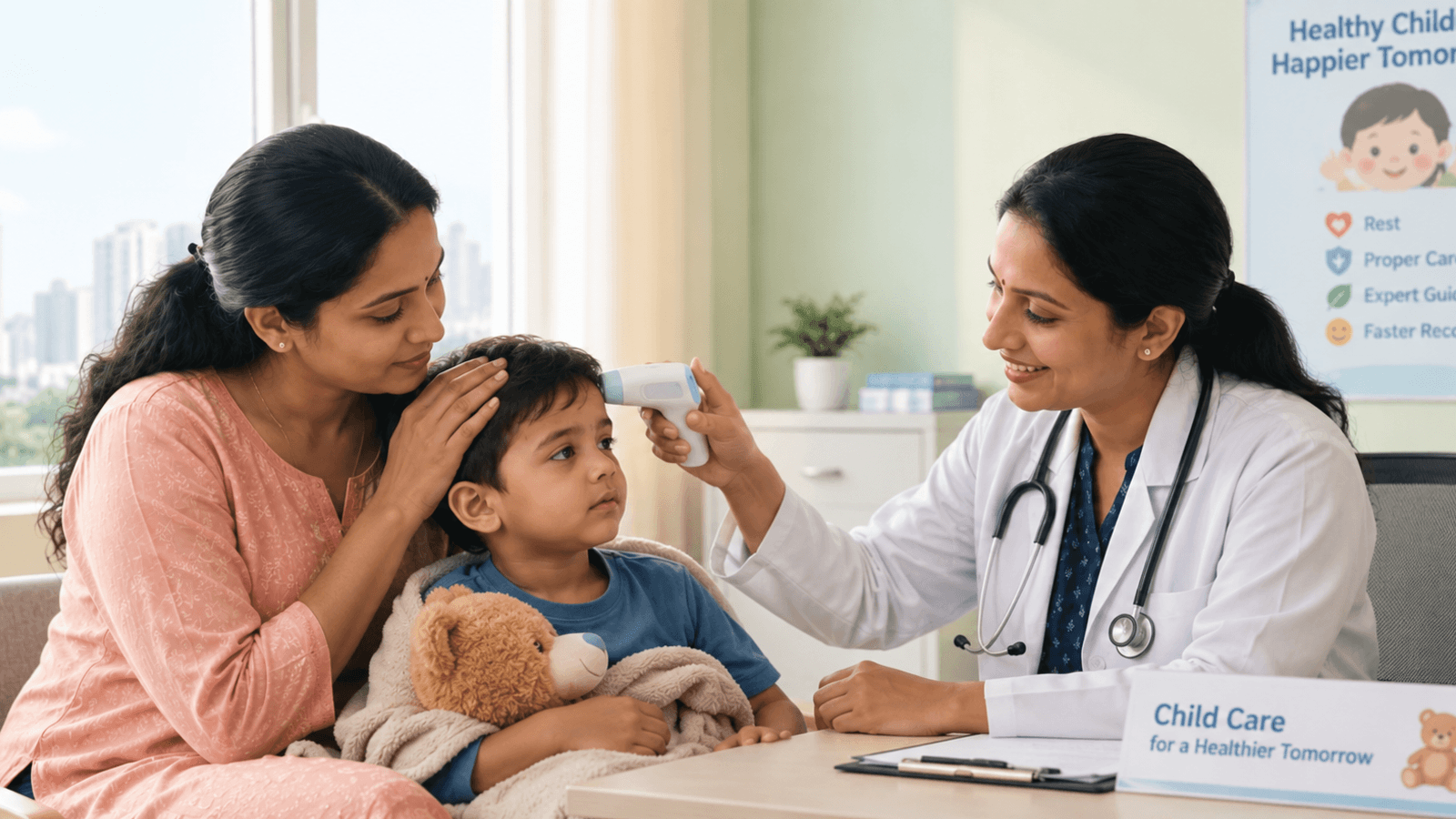
Use a reliable digital thermometer and record significant changes.
Fluid Intake
Observe whether the child is drinking adequately.
Urination
Reduced urination can be a sign of dehydration.
Activity
Notice whether the child is alert, responsive, and interacting normally.
Breathing
Watch for unusually fast or difficult breathing.
New Symptoms
Note the appearance of rash, persistent vomiting, severe pain, seizures, or other concerning symptoms.
Keeping this information available can also help the pediatrician understand how the illness has progressed.
Finding Pediatric Care in Bangalore
When a child develops recurrent fever or other symptoms that concern parents, having access to a pediatric healthcare provider can make it easier to seek appropriate medical advice.
Families searching for a Child Specialist in Bangalore may consider factors such as pediatric experience, accessibility, range of services, child-friendly care, and continuity of healthcare.
For families around Begur, Singasandra, DLF Layout, Akshayanagar, Basapura, Hosa Road, Electronic City, Bommanahalli, Hongasandra, Devarachikkanahalli, Arakere, Garvebhavi Palya, Mico Layout, Vijaya Bank Layout, and Manipal County Road, a conveniently accessible pediatric clinic can make consultations and follow-ups easier.
Pediatric Care at Little's Clinic
Little's Clinic provides pediatric healthcare for newborns, infants, children, and adolescents. The clinic focuses on pediatric consultation, vaccinations, newborn care, growth monitoring, nutrition, and child health.
Parents can explore:
- Pediatric Consultation
- Child Vaccination
- Baby Immunization
- Newborn Care
- Child Health Check-up
- Child Growth Monitoring
- Child Nutrition
- Viral Fever Treatment for Children
- Pediatric Allergy Treatment
- Developmental Assessment
For families looking for a Pediatric Clinic in Bangalore, maintaining a relationship with a pediatrician can help parents seek professional guidance when a child's health changes.
Conclusion:
Viral infections are a common reason children develop fever, and many uncomplicated cases improve with supportive care, adequate fluids, rest, and appropriate management of discomfort. However, parents should not assume that every fever is viral.
Knowing when to monitor at home and when to consult a pediatrician is an important part of responsible child healthcare. Infants, children with concerning symptoms, and children whose condition is worsening or not improving should receive appropriate medical evaluation.
For families searching for Viral Fever Treatment for Children, Pediatrician in Bangalore, or a Child Specialist in Bangalore, professional pediatric guidance can help determine the appropriate next step for the individual child.
Frequently Asked Questions
Is every fever in a child a viral fever?
No. Fever can occur with viral infections, bacterial infections, vaccinations, and other conditions. The cause cannot always be determined from fever alone.
What is considered a fever in children?
A temperature of 38°C (100.4°F) or higher is generally considered a fever. The appropriate measurement method can vary by age, so parents should use a suitable digital thermometer and follow its instructions.
When should I take my child to a pediatrician for fever?
Consult a pediatrician when the child appears significantly unwell, has persistent or worsening symptoms, is not drinking adequately, shows signs of dehydration, has breathing difficulties, develops a concerning rash, or you are worried about their condition.
Can I give antibiotics for viral fever?
Antibiotics do not treat viral infections. They should only be used when prescribed or recommended by a qualified healthcare professional for an appropriate indication.
Can children take fever medicine?
Some children may be given age- and weight-appropriate fever-reducing medicine for discomfort, but the correct medicine and dose should be confirmed from reliable instructions or a pediatrician. Never give aspirin to a child unless specifically instructed by a healthcare professional.
What is the most important thing to monitor during a child's fever?
Look at the whole child, not only the temperature. Hydration, breathing, responsiveness, activity level, feeding, urination, and the appearance of new symptoms are all important indicators.