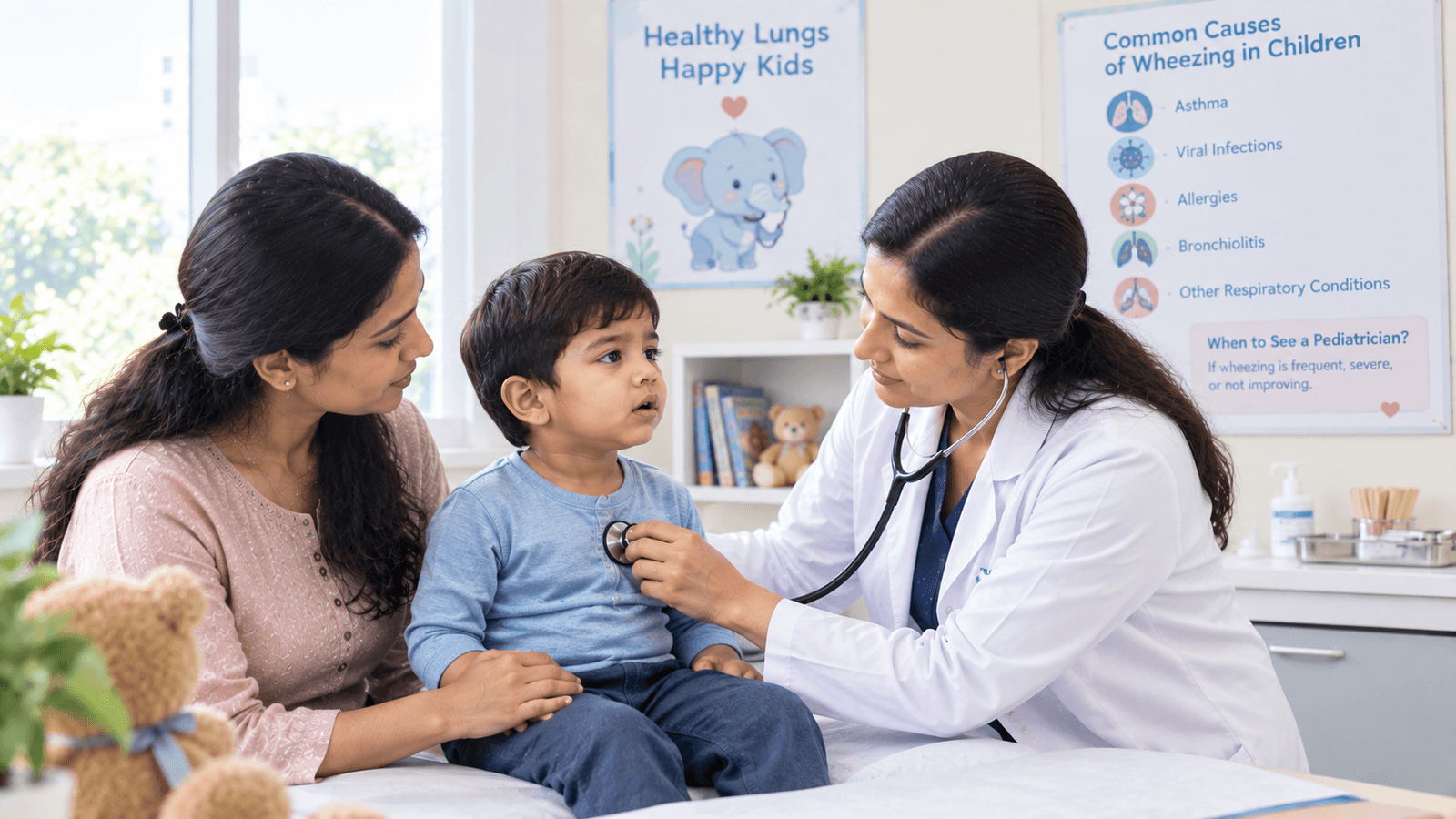
Hearing a whistling or unusual sound when your child breathes can immediately make you concerned. Wheezing in children can happen during a common respiratory infection, but repeated or severe wheezing may sometimes point to an underlying airway or respiratory problem.
Parents often wonder whether wheezing will go away on its own, whether it is related to asthma, and when their child should be examined by a pediatrician.
Understanding the common causes of wheezing and recognising warning signs can help parents know when medical advice may be needed.
If you're concerned about Wheezing in Children, this guide explains common causes, symptoms to watch for, home care considerations, and when to consult a Pediatrician in Bangalore.
What Is Wheezing in Children?
Wheezing is a high-pitched or whistling sound that may occur when air moves through narrowed or inflamed airways.
It may be more noticeable when a child breathes out, although some respiratory conditions can cause unusual breathing sounds during both inhalation and exhalation.
Wheezing is a symptom rather than a diagnosis. Children can wheeze for different reasons, so parents should avoid assuming that every episode means asthma.
The child's age, symptoms, medical history, and breathing pattern all help a pediatrician understand the possible cause.
What Causes Wheezing in Children?
Several conditions can cause wheezing.
Common causes include:
- Viral respiratory infections
- Asthma
- Allergies
- Exposure to smoke or air pollution
- Environmental irritants
- Certain respiratory conditions
- Occasionally, an inhaled foreign object
A child may wheeze during or after a cold because respiratory infections can temporarily affect the airways.
If wheezing keeps returning or happens without an obvious infection, a pediatric evaluation can help identify the underlying cause.
Wheezing During a Cold: Is It Always Serious?
Not necessarily. Some children may develop temporary wheezing during a viral respiratory infection.
Parents should nevertheless pay attention to the child's overall condition.
If the child is breathing comfortably, drinking normally, remains reasonably active, and symptoms are mild, the illness may be monitored according to medical advice.
However, worsening cough, rapid breathing, chest retractions, poor feeding, unusual tiredness, or difficulty breathing requires medical attention.
Could Wheezing Be a Sign of Asthma?
Wheezing can be one symptom associated with asthma, but wheezing alone does not confirm the diagnosis.
Asthma may also cause:
- Repeated coughing
- Night-time cough
- Shortness of breath
- Chest tightness
- Breathing difficulty during exercise
- Symptoms that return after exposure to particular triggers
If these symptoms keep recurring, parents should discuss them with a pediatrician.
Keeping track of when the wheezing occurs can be useful. For example, parents may note whether it happens during exercise, at night, during colds, or after exposure to dust or smoke.
What Should Parents Observe During an Episode of Wheezing?
When a child starts wheezing, parents should look beyond the sound itself.
Observe:
- How quickly the child is breathing
- Whether the child is struggling to breathe
- Whether the ribs or area below the ribs pull inward during breathing
- Whether the child can speak, cry, eat, or drink normally
- Whether the child appears unusually tired
- Whether there is a fever or cough
- Whether the symptoms are improving or worsening
These observations can provide useful information when speaking with a pediatrician.
When Should a Pediatrician Evaluate Wheezing?
A pediatric consultation is advisable when wheezing:
- Keeps returning
- Happens without an obvious cold
- Interferes with sleep
- Limits physical activity
- Occurs with repeated coughing
- Is associated with breathing difficulty
- Is accompanied by other concerning symptoms
- Does not improve or becomes worse
A pediatrician may assess the child's breathing, listen to the chest, review previous illnesses, and consider whether further evaluation is required.
Early evaluation can help distinguish temporary respiratory symptoms from recurring conditions such as asthma or allergies.
What Can Parents Do at Home?
For mild respiratory symptoms, parents can focus on keeping the child comfortable and following the advice provided by their healthcare professional.
Helpful measures may include:
- Encouraging adequate fluids
- Allowing sufficient rest
- Keeping the child away from cigarette smoke
- Avoiding known respiratory irritants
- Monitoring breathing and symptoms
- Following prescribed medication instructions if the child has an existing treatment plan
Parents should not start antibiotics or other medicines without appropriate medical advice.
When Is Wheezing an Emergency?
Wheezing accompanied by significant breathing difficulty requires urgent medical attention.
Seek urgent care if your child:
- Is struggling to breathe
- Is breathing very rapidly
- Has visible pulling in around the ribs while breathing
- Cannot speak, cry, eat, or drink normally because of breathing difficulty
- Develops blue or grey lips or face
- Becomes unusually sleepy or difficult to wake
- Has rapidly worsening symptoms
Do not wait for symptoms to become severe before seeking help if your child appears to be struggling to breathe.
Pediatric Care for Respiratory Symptoms in Bangalore
Recurring wheezing can be stressful for parents, particularly when it interferes with a child's sleep, school, or normal physical activities.
Families in Bangalore can consult a pediatrician for appropriate assessment of wheezing, cough, allergies, asthma symptoms, and other respiratory concerns.
Parents living around Begur, Singasandra, Akshayanagar, Bommanahalli, Hongasandra, Devarachikkanahalli, Hosa Road, and Electronic City can seek pediatric guidance when respiratory symptoms repeatedly affect their child.
At Little's Clinic, pediatric care focuses on evaluating children's health concerns and supporting their overall wellness.
Understanding Wheezing Can Help Parents Respond Early
Wheezing in children can have several causes, ranging from temporary respiratory infections to conditions such as asthma or allergies. The sound alone does not establish a diagnosis.
Parents should pay attention to recurring symptoms, breathing difficulty, changes in activity, and how the child responds during an episode. When symptoms are persistent or concerning, a pediatric evaluation can help identify the cause and determine the appropriate next steps.
If your child experiences recurring wheezing or breathing concerns, consulting a Pediatrician in Bangalore can help you understand the symptoms and whether further evaluation is needed.
Frequently Asked Questions
What causes wheezing in children?
Wheezing may occur because of viral respiratory infections, asthma, allergies, environmental irritants, or other airway conditions. The cause depends on the child's symptoms and medical history.
Does wheezing always mean asthma?
No. Many children can wheeze during respiratory infections without having asthma. Repeated wheezing should be evaluated by a pediatrician.
When should I take my child to a doctor for wheezing?
Consult a pediatrician when wheezing is recurrent, persistent, affects sleep or activity, or occurs with repeated coughing or breathing difficulty.
Can a cold cause wheezing in children?
Yes. Some children may wheeze during viral respiratory infections. However, significant breathing difficulty or worsening symptoms require medical evaluation.
Is wheezing in children an emergency?
Wheezing can be an emergency when it is accompanied by severe breathing difficulty, very rapid breathing, difficulty speaking or drinking, bluish lips or face, or extreme tiredness.